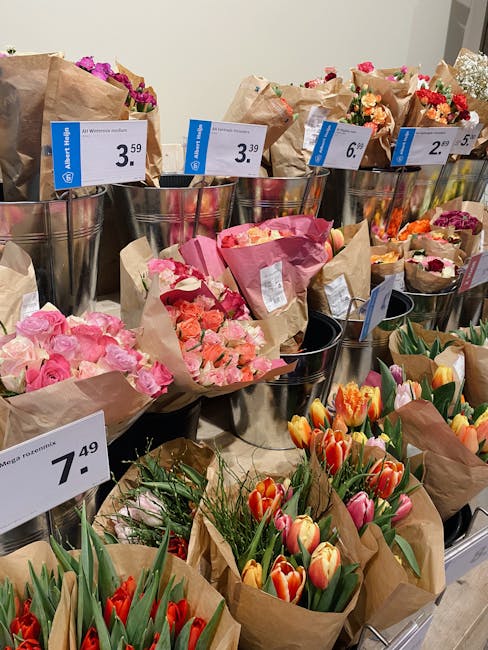
Bulk stems pricing explained: what quantity discounts look like
If you have ever compared a single bunch price with a bulk flower order and thought, "Why does the total look so different?" you are not alone. Bulk stems pricing explained: what quantity discounts look like is really about understanding how flower costs shift when you buy more stems at once, what the discount tiers usually mean, and how to judge whether you are actually saving money or just buying more than you need.
This matters for wedding planners, florists, event teams, corporate buyers, and anyone trying to stretch a budget without compromising on quality. It also helps if you are ordering for a big installation, a weekly counter display, or a last-minute event where the flower choice has to be both beautiful and practical. The short version? Bulk pricing is not just "cheaper per stem" in a simple way. There are thresholds, freshness factors, delivery considerations, and sometimes hidden trade-offs. Let's unpack it properly.
Why bulk stems pricing matters
Quantity discounts can look simple on a product page, but in real buying decisions they do a lot more than reduce the headline price. They change how you budget, how you plan designs, and how much risk you take on with freshness and waste. If you are buying for a wedding breakfast in a venue that smells faintly of eucalyptus and coffee at 8 a.m., the numbers matter, yes - but so does reliability.
Bulk stems pricing matters because flowers are perishable and highly seasonal. A discount may be generous on paper and still not be the best value if the stems are too short, too tight in bud, or arrive at the wrong stage of opening. On the other hand, the right quantity discount can free up budget for premium focal flowers, greener foliage, or better delivery timing. That is where the real value is found.
For businesses, bulk pricing is also tied to consistency. Corporate receptions, hotel lobbies, restaurant tables, and subscription-style arrangements often need a predictable cost per arrangement. If you are managing ordering across multiple weeks, a good bulk stems arrangement can make your costs easier to forecast and your displays easier to keep fresh.
Practical takeaway: quantity discounts are not just about paying less. They are about understanding the point where buying more genuinely improves your cost per usable stem.
How bulk stems pricing explained: what quantity discounts look like works
Most bulk pricing models follow a tiered structure. The more stems you buy, the lower the price per stem becomes. But the discount is usually not linear. In other words, the first threshold might save a little, the next one a bit more, and then a bigger order may unlock a deeper reduction. That is fairly normal.
Here is the basic idea in plain English:
- Small quantity: best for sample arrangements, testing colour palettes, or small domestic use.
- Mid-tier quantity: often where the first meaningful discount appears.
- Large quantity: usually the lowest unit price, but with the biggest commitment.
What many buyers miss is that the quoted "bulk" price may depend on more than stem count. Stem length, bloom size, flower variety, freshness grade, and seasonality can all influence the final number. A long-stem rose at peak demand is a different proposition from a hardy seasonal bloom in better supply. Truth be told, flower pricing can be a bit like weather in the UK: you think you have a tidy forecast, and then one variable shifts everything.
It also helps to separate three pieces of the price:
- Base stem cost - the starting price before any discount.
- Quantity break - the threshold where the unit cost drops.
- Additional charges - delivery, packaging, or special handling where relevant.
That last point is easy to overlook. A low per-stem figure can be offset by delivery charges, especially if you need timed arrival or careful handling for fragile blooms. If you want to understand the broader buying process, it can help to look at the retailer's delivery information, payment details, and guarantees before you place a larger order.
What a quantity discount usually looks like
A quantity discount often appears as a stepped reduction. For example, a supplier may show one price for 1-9 stems, a lower price for 10-24 stems, and a better price again for 25 or more. The exact brackets vary, but the pattern is familiar across the trade.
Sometimes the biggest discount only makes sense if you are already close to that threshold. If you need 18 stems and the discount starts at 20, it may be worth adding two more if you can use them. If not, buying extra can create waste - and waste quietly eats into savings.
Key benefits and practical advantages
The obvious benefit is lower cost per stem, but that is only the start. Once you understand bulk stems pricing properly, the advantages become more operational.
- Better budget control: easier to forecast spend for weddings, venues, subscriptions, or regular displays.
- More design freedom: savings on one flower type can be redirected into focal blooms or premium greenery.
- Reduced ordering friction: one bigger order can be simpler than several small ones.
- Stronger consistency: bulk orders can make it easier to keep arrangements matching across multiple tables or sites.
- Potentially lower packaging waste: depending on how stems are prepared and delivered, consolidated orders may be more efficient.
There is also a subtle but important advantage: bulk buying can make creative planning calmer. If you know the stem cost in advance, you can focus on shape, proportion, colour balance, and vase life rather than constantly asking whether the numbers still work. That is a nicer way to plan, to be fair.
For businesses thinking beyond one-off orders, bulk purchasing can also support longer-term relationships with suppliers and account-based ordering. If that is part of your setup, it is worth reviewing corporate accounts as a way to keep ordering structured and easier to manage.
Who this is for and when it makes sense
Bulk stems pricing is not only for large-scale event floristry. In fact, some of the smartest bulk purchases happen at a much smaller scale, where the buyer simply wants reliable value and fewer surprises.
This approach makes sense for:
- Florists who need repeatable stock for daily work
- Wedding planners balancing beauty, volume, and budget
- Corporate teams arranging reception or venue flowers
- Hospitality businesses that refresh arrangements regularly
- Event stylists building arches, tablescapes, or large installations
- Community groups and charities planning celebrations or memorial displays
It also makes sense if you already know which stems you are likely to use quickly. Roses, lilies, chrysanthemums, carnations, tulips, and seasonal mixed stems all behave differently once delivered, so your buying confidence matters. If you understand the flower variety, the opening stage, and the likely vase life, bulk pricing becomes much easier to use intelligently.
There are times when it does not make sense. If you only need a handful of stems for a kitchen table, the effort and risk of bulk buying can outweigh the savings. Likewise, if you are uncertain about colour matching or event numbers, overbuying can be a headache. One or two spare stems is fine. Forty extra? Less charming.
Step-by-step guidance
If you are comparing bulk flower prices for the first time, use this simple process. It keeps the decision grounded and stops you being seduced by the biggest discount badge on the page.
- Confirm the actual stem count you need. Count by table, arrangement, installation, or vase. Do not estimate too loosely.
- Check the size of the discount brackets. Identify the threshold where the per-stem price changes.
- Calculate the real cost per usable stem. Include delivery and any extras if they apply.
- Think about freshness and timing. Will you be able to condition the flowers and use them in time?
- Compare like for like. Stem length, bloom size, and variety should be similar before you compare prices.
- Check the return and refund position. Perishability means policies matter more, not less. Read the returns and refund guidance before ordering.
- Place the order with enough lead time. Especially for large events or busy dates such as bank holidays and peak wedding season.
A useful habit is to write your order in two columns: "needed" and "nice to have." The needed column is the one that should drive the bulk quantity. The nice-to-have column can be filled only if the pricing break truly works in your favour.
If the flowers are going straight into an arrangement, you may also want to plan aftercare at the same time. A quick look at flower care advice can save you from treating stems as if they were tougher than they actually are. They are beautiful, but they are not indestructible. Sadly.
Expert tips for better results
Small buying decisions make a big difference once orders get large. Here are the habits that tend to separate smooth bulk purchases from messy ones.
- Buy to design, not just to price. The cheapest stem is not always the one that supports your arrangement best.
- Look for usable stem quality. A discount is only useful if the flowers arrive in condition that suits your purpose.
- Use the discount threshold strategically. If you are close to a bracket, calculate whether a few more stems genuinely improve value.
- Keep a simple cost-per-arrangement note. Over time, this becomes far more useful than a pile of old invoices.
- Order seasonal flowers when they are in natural supply. This often gives better value than chasing a scarce imported variety.
- Confirm lead time for larger orders. A bulk order placed too late can remove your flexibility, and that is never fun.
One thing professionals do quite well is accept that not every order needs to squeeze every penny. Sometimes a slightly higher unit price is worth it if the delivery is more reliable, the blooms are fresher, or the waste rate is lower. That is not overspending. That is judgement.
If you are buying flowers for a recurring use case, it can also be worth speaking to a supplier about recurring ordering patterns through corporate accounts. It does not magically solve everything, but it can make budget planning less annoying. And anything that makes ordering less annoying is welcome, frankly.
Common mistakes to avoid
Most bulk pricing mistakes come from rushing the decision. The discounts look attractive, the clock is ticking, and suddenly the buyer is committing to more stems than the event really needs.
- Comparing only the headline price. Always check delivery, minimum order value, and whether the stems are truly comparable.
- Ignoring stem length or bloom grade. A lower price can reflect a different specification, not a better bargain.
- Ordering too much "just in case." Some spare flowers are useful. A surplus that wilts in a corner is not.
- Forgetting the conditioning time. Bulk stems need proper preparation before display.
- Missing the timing of seasonal demand. Price breaks can shrink around peak periods.
- Not checking supplier policies. Refunds, delivery terms, and guarantees matter more when the basket size is larger.
A very common one is this: someone sees a lower unit cost at a higher quantity and assumes it must be the best option. But if 30 stems would do the job and 50 is the discounted tier, the "saving" can disappear fast once you count waste. Better to buy well than buy big. Usually.
Tools, resources and recommendations
You do not need fancy software to make sensible bulk decisions. A few straightforward tools and habits are enough for most buyers.
- A simple spreadsheet: track stem count, unit price, delivery, and total cost per order.
- Event planning notes: list how many arrangements, tables, or installations the flowers need to support.
- Flower care checklist: keep a printed or saved routine for conditioning, trimming, and hydration.
- Order calendar: note peak dates, lead times, and preferred delivery windows.
- Supplier policy pages: review payment, delivery, guarantees, and returns before a high-value purchase.
For a smoother experience, it can also help to understand the provider behind the flowers. Pages such as about us, delivery, guarantees, and sustainability give useful context about how orders are handled and what kind of service expectations you should set.
If you need to speak with someone before ordering, contact the team rather than guessing. For bulk purchases, a quick conversation can save a lot of back-and-forth later. Sometimes ten minutes on the phone is worth an hour of spreadsheet fiddling. Actually, more than an hour.
Law, compliance, standards and best practice
For flower buyers in the UK, bulk stems pricing is mostly a commercial and practical issue rather than a heavily regulated one. Even so, best practice still matters. You are dealing with perishable goods, consumer expectations, payment terms, and sometimes event-critical deadlines. That means clarity is important.
Here are the main practical points to keep in mind:
- Check terms before paying: especially for large or time-sensitive orders.
- Understand what the price includes: VAT, delivery, packaging, or timed dispatch may affect the total.
- Review refund and replacement rules: this is particularly important for fresh goods with short usable windows.
- Keep records: invoices, confirmations, and any special instructions should be easy to find.
- Ask about sustainability or sourcing where relevant: if this matters to your organisation, make it part of the buying brief.
If your buyer organisation has accessibility needs, it is also sensible to check site information such as the accessibility statement. Good process is part of good service. That includes how information is presented, how payments are handled, and whether customer support is easy to use.
You should also look at policies around data and cookies if you are ordering through a shared business account, since staff members may be reviewing order details on company devices. The privacy policy, cookie policy, and terms and conditions are worth reading, even if they are not the exciting part of the purchase. They rarely are.
Options, methods and comparison table
Bulk stems can be bought in a few different ways, and the right method depends on your use case. A small private event, a retail display, and an ongoing corporate contract rarely need the same buying pattern.
| Buying method | Best for | Typical advantage | Main caution |
|---|---|---|---|
| Small bulk order | Testing designs, smaller events, low-risk buying | Lower commitment and easier handling | Discount may be modest |
| Threshold-based bulk order | Buyers close to a price break | Better unit cost per stem | Extra stems may create waste if not used |
| Large planned order | Weddings, installations, corporate displays | Strongest pricing and simplest forecasting | Needs tighter planning and storage |
| Recurring account-based order | Businesses with regular flower usage | More consistent purchasing process | Requires order discipline and coordination |
In practice, the "best" option is the one that balances cost, freshness, and operational ease. A designer may prefer one slightly more expensive method if it reduces risk on the day. A retailer, on the other hand, may care more about repeatability and predictable margin. Different job, different answer.
Case study or real-world example
Imagine a small London event team planning a reception for 12 tables plus a welcome display. They want a clean, seasonal look with simple white and green arrangements. At first glance, ordering flowers table by table sounds manageable. But once they map out the actual stem counts, the picture changes.
They need enough consistent stems to keep all table arrangements aligned, with a few extras for the entrance and a backup buffer. The first quote they see offers a small discount for 10 stems, a better one at 25, and a more attractive unit price at 50. It is tempting to leap to the largest tier, because the per-stem price is the lowest. But after checking the design, they realise only 34 stems will be used with confidence.
So they choose the middle-to-upper tier instead. They keep the order aligned to the real design needs, avoid unnecessary leftovers, and still capture most of the discount benefit. That is the sweet spot many buyers are really looking for.
The team also checks delivery timing, payment details, and aftercare before the event. That matters because bulk stems arrive as a living product, not a shelf item. By the time the flowers are conditioned and arranged, the purchase feels less like shopping and more like production planning. Which, honestly, it is.
The lesson here is simple: quantity discounts are most valuable when they support a well-planned design, not when they tempt you into over-ordering. The best saving is the one that fits the actual job.
Practical checklist
Use this checklist before placing a bulk stems order.
- Have I counted the exact number of stems needed?
- Do I know the discount threshold that applies?
- Have I compared like for like on stem length, bloom size, and variety?
- Have I included delivery and any other charges in the total?
- Do I have enough time to condition and use the flowers properly?
- Have I checked the supplier's guarantees, payment, and refund terms?
- Do I know what I will do with any spare stems?
- Have I considered seasonal availability and likely freshness?
- If this is a business order, do I need a corporate account process?
- Have I saved all confirmation details in one place?
If you can tick most of those boxes, you are probably in good shape. If not, pause for a minute and fix the gaps. A careful order is almost always cheaper in the long run.
Conclusion
Bulk stems pricing is easiest to understand when you stop thinking of it as a single "cheap or expensive" decision. It is really a balancing act between volume, quality, timing, and what you will actually use. The best quantity discounts are the ones that lower your cost without creating waste or compromising the final display.
Once you know how the tiers work, what affects unit price, and where the hidden costs live, you can buy with much more confidence. That confidence matters. It keeps planning calmer, budgets cleaner, and flower orders a bit less stressful - which is never a bad thing in a busy week.
If you are preparing a larger order and want to compare options properly, start with clear stem counts, read the policy pages, and check the delivery details before you commit. That is the sensible route, and usually the most economical one too.
Get a free quote today and see how much you can save.
And if the numbers still feel a bit slippery, that is normal. Flowers are meant to feel special, after all, not like buying screws.
Frequently Asked Questions
What does bulk stems pricing actually mean?
It means the price per stem changes depending on how many stems you buy in one order. Larger quantities usually qualify for a lower unit cost, but the exact discount depends on the flower type, availability, and any delivery or handling charges.
How do quantity discounts for flowers usually work?
They normally work in tiers. For example, a small order may be full price, a larger order may unlock a first discount, and a very large order may lower the per-stem cost again. The thresholds vary from supplier to supplier.
Is the cheapest per-stem price always the best value?
No, not necessarily. If the cheapest rate requires you to buy more stems than you can use, the extra flowers can become waste. Best value is usually the lowest cost for the number of usable stems you actually need.
What should I compare when looking at bulk flower prices?
Compare stem count, flower variety, stem length, bloom size, delivery cost, freshness expectations, and the supplier's terms. If those details are not aligned, the headline price can be misleading.
Do bulk flower orders need more planning?
Yes, they do. Larger orders need better timing, more careful storage or conditioning, and a clearer idea of how the flowers will be used. The bigger the order, the more important the planning.
Are bulk stems suitable for small events?
They can be, if the event needs a consistent look and the quantity break makes sense. But for very small events, the discount may not be enough to justify buying extra stems.
Can I save money by buying just enough to hit the next discount tier?
Sometimes, yes. If the extra stems will still be used, it can be a smart move. If they are likely to go unused, the saving may disappear. Always calculate the real cost per usable stem.
What happens if some of the stems arrive in poor condition?
That depends on the supplier's guarantees and returns policy. For fresh products, conditions are often specific, so it is wise to check the policy in advance and inspect the delivery promptly on arrival.
Are corporate buyers better off using bulk pricing?
Often, yes, especially where flowers are ordered regularly. Corporate purchasing can benefit from structured ordering, clearer budgeting, and easier repeat orders. It is worth exploring account options if your business buys flowers often.
Should I choose seasonal flowers for better bulk pricing?
Usually, seasonal flowers offer better value because they are more widely available and often easier to source consistently. That said, seasonal choice should still fit the design brief and the occasion.
Do I need to read the terms before placing a large flower order?
Absolutely. Terms, delivery details, payment rules, and refund guidance all matter more when the order value is higher. It is not the most thrilling reading, but it can save a lot of hassle later.
Where can I find more information before ordering?
Useful pages to review include the delivery, payment, guarantees, returns and refund, and flower care sections. If you are buying on behalf of a business, the corporate accounts page may also help you plan the ordering process more cleanly.