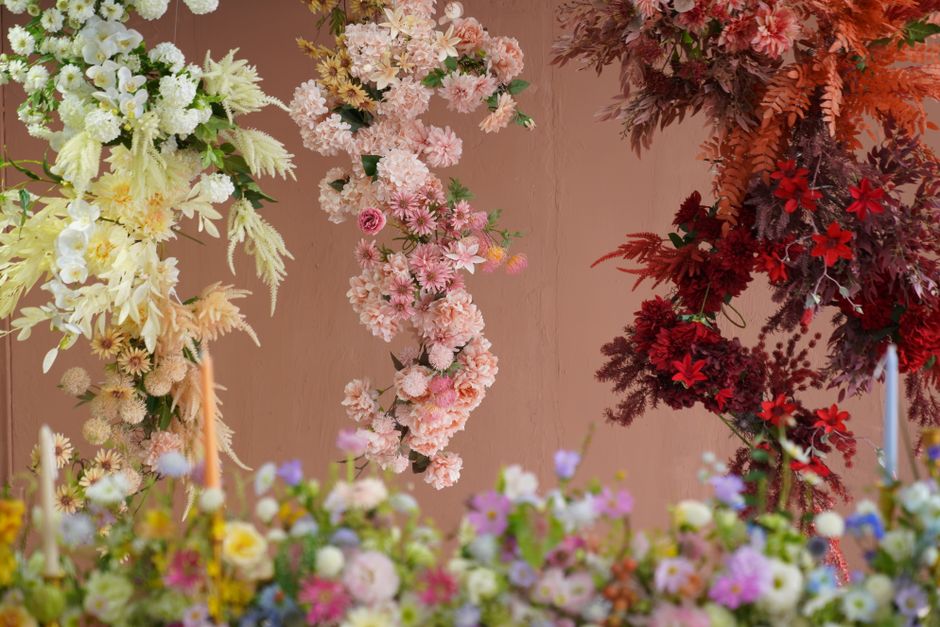
Professional staging techniques for large floral installations
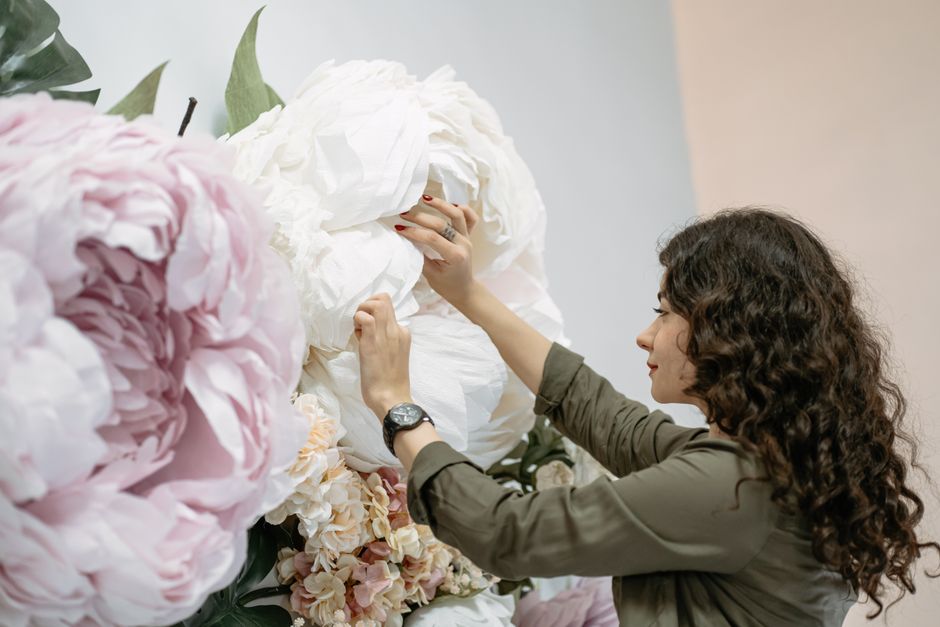
Large floral installations can look effortless from the guest side of the room. That is usually the point. Behind the scenes, though, the staging is doing a lot of heavy lifting. Professional staging techniques for large floral installations are what keep a towering ceremony arch steady, a ceiling meadow balanced, and a brand event display looking polished all evening rather than collapsing into a slightly sad heap by 8 p.m.
If you have ever seen a floral feature wobble under lights, lean after a warm spell, or arrive looking magnificent and then struggle in the venue, you already know why staging matters. Good floral design is only half the job. The other half is structure, transport, positioning, weight distribution, timing, and a calm eye for practical details. Let's face it: the prettiest flowers in the world cannot fix a poor rigging plan.
This guide breaks down how large-scale floral staging works, what professionals prioritise, and how to avoid the common mistakes that cost time, money, and a bit of dignity on event day. It also includes a useful checklist, a comparison table, and a realistic example so you can judge what "good" looks like in practice.
- Why staging matters
- How the process works
- Benefits and advantages
- Who it is for
- Step-by-step guidance
- Expert tips
- Common mistakes
- Tools and recommendations
- Compliance and best practice
- Methods compared
- Real-world example
- Practical checklist
- FAQs
Why Professional staging techniques for large floral installations Matters
Staging is the backbone of any large floral installation. It determines whether the piece feels deliberate, secure, and elegant, or whether it looks like it is fighting the room. A floral cloud over a reception desk, for example, needs more than beauty. It needs a safe fixing point, sensible load support, and a profile that works with the lighting, ceiling height, and sightlines.
Professional staging techniques reduce risk in a very practical way. They help prevent tipping, sagging, crushing, water leakage, and awkward on-site improvisation. That matters in hotels, marquees, historic buildings, galleries, shops, and corporate venues where you often have strict access windows and very little room for error. You may have only one chance to get it right before guests arrive, and no one wants to be cutting zip ties in a doorway while the organiser is asking whether the champagne is ready.
They also protect the design itself. A well-staged installation keeps the floral focal points where they should be, so the piece reads clearly from the entrance, the stage, or the camera angle. This is especially important for weddings, press launches, and brand activations, where the display is part decor and part visual storytelling.
Expert takeaway: for large floral work, staging is not a hidden technical extra. It is part of the design language. The structure shapes what the audience sees, how safe the installation is, and how long it will hold up once the room fills with people, heat, and movement.
There is also a trust element. When clients see tidy prep, sensible support, and clean finishing, they feel reassured before the flowers even go in. That calm is worth a lot.
How Professional staging techniques for large floral installations Works
At a basic level, staging means building a secure framework that can support the flowers, mechanics, and any decorative extras. But the professional version is more considered than "attach flowers to structure and hope for the best." It starts with a site assessment, then moves through load planning, mechanics selection, assembly, transport, and final installation.
The process usually begins with the venue itself. A florist or floral production team will look at ceiling height, anchor points, floor conditions, access routes, power access, temperature, and how the installation will be viewed. A ceiling piece in a ballroom needs a different approach from a freestanding lobby sculpture. If the display is meant to be seen from below, the underside matters. If it is on a stage, the back and side profiles matter too. Simple enough in theory; slightly fiddly in reality.
Next comes the support system. For large floral installations, that might include freestanding frames, weighted bases, scaffold-based structures, floral foam alternatives, chicken wire cages, cable systems, truss, or layered armatures. The choice depends on scale, venue permissions, hydration needs, and whether the design must be temporary, reusable, or built with more sustainable materials.
The flowers are then staged onto a structure in phases. Heavier flowers and structural foliage usually go in first. Softer focal blooms, delicate textures, and finishing pieces come later. This sequencing matters because the structure has to be stable before the final detail work begins. If you try to do the whole thing in one rushed pass, the odds of bruising petals or disturbing balance go up fast.
Finally, the piece is checked under real conditions. That means stepping back, checking symmetry, confirming fixings, and making sure nothing shifts as the room changes temperature. In a warm venue, what feels firm at 10 a.m. may relax by the evening. Professional staging anticipates that.
Key Benefits and Practical Advantages
Well-staged floral installations do more than look pretty. They create confidence, save time, and reduce unnecessary stress for everyone involved.
- Improved safety: secure structures reduce the chance of collapse, falling elements, or unstable displays.
- Better visual balance: the arrangement reads more naturally from every important angle.
- Longer display life: smart staging supports hydration and airflow where needed, helping the flowers last.
- Cleaner installation day: a plan saves on-site scrambling, especially when access is tight.
- Stronger client confidence: polished build quality shows attention to detail.
- Less waste: when the design is planned properly, fewer materials get duplicated or discarded mid-build.
There is also a creative advantage. Good staging gives you more freedom to design boldly. Want a floral runner to appear to float across the table? Want a doorway piece that curves and recedes rather than sitting in one flat line? Good structure makes that possible. Without it, you end up designing around weakness, which is never ideal.
For corporate work, staging has another benefit: it helps keep the installation aligned with brand standards. A well-built feature looks considered in photos, which matters if the display will appear in launches, social posts, or press coverage. If your team also handles recurring client accounts, keeping the build process tidy supports consistency across events. That consistency is part of the professional offering, as much as the flowers themselves.
If you are thinking about the wider customer experience too, details such as timing, care, and delivery matter in the same way. Pages like delivery information and flower care advice show how the aftercare side fits into a quality-first approach.
Who This Is For and When It Makes Sense
Professional staging techniques are relevant anywhere flowers need to perform at scale. That includes weddings, private dinners, hotel receptions, exhibitions, store launches, award nights, film sets, and corporate events. If the installation is larger than a tabletop centrepiece, staging becomes more than a nice-to-have.
It makes particular sense when any of the following apply:
- the installation is overhead, freestanding, or suspended
- the venue has limited access, narrow doors, or strict working hours
- the flowers need to last many hours or overnight
- the design is being photographed or filmed
- the venue has weight, fixings, or conservation restrictions
- the installation includes mixed materials such as glass, candles, signage, or fabric
For couples and private clients, the staging question often comes down to peace of mind. Do you want the ceremony arch to feel safe and elegant, or do you want to spend the morning worrying whether the frame is standing straight? For event managers, the question is even sharper because there is usually a whole schedule hanging off the floral install, figuratively and sometimes literally.
If you are working on repeat installations for hotels or brands, staging also affects consistency across seasons. The design may change, but the underlying method should not feel improvised every time. That is one of the signs you are dealing with a genuinely professional team.
Step-by-Step Guidance
Here is the practical sequence professionals tend to follow when staging a large floral installation. The details vary, of course, but the logic stays similar.
- Survey the site. Measure ceiling height, access points, floor space, and likely sightlines. Note anything awkward, such as uneven flooring or fragile surfaces.
- Clarify the design intent. Decide whether the piece should feel airy, dense, architectural, organic, symmetrical, or intentionally asymmetrical.
- Choose the structure. Pick the support system that suits the weight, the venue rules, and the display duration.
- Plan the mechanics. Set out where water sources, fixings, hidden supports, and reinforcement points will go.
- Pre-build key sections. In many cases, the base or main floral modules are constructed off-site for control and speed.
- Transport carefully. Secure everything in crates, trays, or support racks so the structure does not shift in transit.
- Install in layers. Start with the structural base, then foliage, then main blooms, then finishing detail.
- Check from every angle. Step back, photograph it, and view it from the actual guest positions.
- Stabilise and tidy. Remove visible mechanics where possible, wipe down surfaces, and confirm the final fixings.
- Review performance later. If the installation is on a long event day, inspect it again before guests arrive or before the evening session.
A small real-world note: the best staging teams do not treat the final five percent as optional. That last check is where you catch the leaning branch, the shiny cable, the bloom that is blocking a sponsor logo, or the one awkward angle that only becomes obvious in natural light at 4 p.m.
Expert Tips for Better Results
Good staging is full of tiny decisions. None of them are glamorous. All of them matter.
1. Build for the venue, not just the sketch
A floral concept board can look wonderful, but the room has the final say. High ceilings, low ceilings, black drapes, bright windows, and old plaster walls all affect how the installation should be staged. If the venue has a character of its own, work with it rather than against it.
2. Prioritise load distribution early
Large floral installs often fail at the weight point, not the bloom point. Spread heavy elements across the frame, especially where water tubes, fresh stems, and dense foliage cluster together. Balanced staging feels boring on paper and brilliant in practice.
3. Use hidden structure where it helps, not everywhere
Clients do not usually want to see a tangle of mechanics. Hide support where you can, but do not overcomplicate it just for appearances. Sometimes a neat visible armature is better than a hidden mess that is difficult to service.
4. Design in maintenance access
If the installation will need refreshing, you need to be able to reach it without dismantling half the piece. This is especially important for reception displays, long wedding days, and staged hotel spaces.
5. Think about photography angles
What looks full from the front may look sparse from above or from the side. One slightly imperfect angle can become the image everyone sees. A bit annoying, yes, but that is the world now.
6. Keep colour and texture in proportion
Huge installations can turn chaotic if every flower type is fighting for attention. Staging helps by controlling where density builds and where the eye rests. Use large blooms, medium layers, and finer textures deliberately.
When clients ask for sustainability, there is usually a staging angle there too. Reusable structures, recyclable mechanics, and less wasteful prep all support the broader approach. If you want to understand the brand's general values and handling standards, the sustainability approach can be a useful reference point.
Common Mistakes to Avoid
Most floral staging problems are preventable. They usually come from rushing, guessing, or assuming the venue will "sort itself out". It rarely does.
- Underestimating weight: fresh flowers, water, moss, foam alternatives, and structural greenery can add up quickly.
- Ignoring access constraints: if a frame cannot fit through the doorway, the rest of the plan is suddenly theoretical.
- Relying on one support point: single-point fixes are risky for large or asymmetrical designs.
- Leaving finishing too late: rushed final detailing is where visible mechanics, gaps, and uneven edges appear.
- Forgetting temperature and time: a warm room or long event day can soften mechanics and affect flower condition.
- Not checking sightlines: a beautiful display can still fail if it blocks the stage, signage, or guest movement.
- Overloading delicate materials: lacey stems, thin branches, and lightweight vessels are not made for major structural work on their own.
One of the quieter mistakes is simply not allowing enough build time. Large floral installations are often handled in a burst of activity, and it is tempting to think an extra half-hour will do the trick. Sometimes it does. Often it doesn't. The calm, boring truth is that staging rewards patience.
Another mistake? Treating every installation as if it is indoors and air-conditioned. British venues can throw a bit of everything at you in one week: cool church interiors, sunny marquees, draughty halls, and hot function rooms with a stubborn radiator somewhere nearby. Different conditions, different behaviour.
Tools, Resources and Recommendations
You do not need a massive toolkit for every job, but professionals usually rely on a sensible mix of structural, finishing, and transport items. The best kit is the kit you can trust when you are tired, slightly dusty, and trying not to crush a hydrangea.
| Tool or material | Best use | Why it helps |
|---|---|---|
| Freestanding frame or armature | Large arches, feature walls, ceiling pieces | Provides the main structural support |
| Weighted base | Vertical or top-heavy installations | Reduces tipping risk and improves stability |
| Reusable mechanics | Multiple-event or corporate work | Supports a more efficient, lower-waste workflow |
| Water vessels or hydration tubes | Fresh flower sections | Helps blooms hold up over a longer event window |
| Transport crates and trays | Off-site prep and safe delivery | Keeps pre-built modules from shifting in transit |
| Step ladder and lighting | On-site detailing | Makes finishing safer and more accurate |
For practical customer-facing support, it also helps to understand the wider service framework around the flowers themselves. Information about flower delivery, guarantees, and returns and refund guidance can matter when installations are part of a broader order or event package.
For recurring business clients, corporate accounts can make planning and repeat scheduling simpler. And if you need to ask about a bespoke brief or event timing, it is sensible to use the contact page early, not at the last minute when the setup window has already become a puzzle.
Law, Compliance, Standards, or Best Practice
Large floral installations often sit in the same practical space as event rigging, venue management, and temporary display work. That means safety and venue rules matter, even when the installation is decorative. Exact requirements vary by venue and project, so it is always wise to confirm expectations with the organiser, the site team, and anyone responsible for access or structural approval.
In the UK, good practice usually means:
- checking venue rules before installation day
- making sure the structure is stable and appropriate for the intended load
- keeping walkways clear and avoiding trip hazards
- protecting floors, walls, and historic surfaces where relevant
- using qualified contractors for any work that resembles rigging or overhead support
- recording any access notes, risk points, or handling requirements in advance
Some venues, especially heritage spaces, hotels, and corporate sites, may have their own internal procedures for fixings, deliveries, working hours, or fire safety. That is normal. It can feel like paperwork. It is still worth it. No one enjoys discovering at 7:30 a.m. that the lift is too small for the frame.
If your installation is part of a larger service arrangement, it is also sensible to review the relevant business terms, privacy details, and accessibility information provided by the supplier. Useful supporting pages include terms and conditions, privacy policy, and the accessibility statement. Those pages do not design the flowers, obviously, but they do help set expectations in a professional way.
Options, Methods, or Comparison Table
Different installations call for different staging methods. Here is a simple comparison of common approaches.
| Method | Best for | Strengths | Trade-offs |
|---|---|---|---|
| Freestanding frame | Arches, entrances, large statement pieces | Flexible, stable, easy to position | Can look bulky if not dressed well |
| Suspended structure | Ceiling meadows, hanging features | Creates impact and preserves floor space | Requires venue approval and careful fixing |
| Table-based staging | Long tables, centrepiece runs, layered reception styling | Simple to service and relatively controllable | Less dramatic vertical presence |
| Wall-mounted or backed build | Brand backdrops, photo walls, stage dressing | Good for photography and signage integration | Depends on wall suitability and venue rules |
| Modular off-site build | Fast installs, repeat events, tight schedules | Saves time on site and improves consistency | Needs careful transport and assembly planning |
In many jobs, the strongest solution is a hybrid. A modular base, for instance, can be paired with freestanding stabilisers and carefully layered floral sections. That approach often gives the best balance of speed, control, and finish quality.
Case Study or Real-World Example
Picture a corporate awards evening in a city hotel. The brief is simple on paper: create a floral feature at the entrance and a smaller stage-side arrangement that photographs well. In reality, the venue has a narrow service lift, a polished floor that cannot be marked, and only a short access window before guests arrive.
The staging team breaks the concept into modules. The entrance piece is built around a weighted freestanding frame, with the heaviest foliage kept low and the focal blooms concentrated slightly above eye level. The stage-side arrangement is lower and flatter so it does not compete with the sponsor signage. Both pieces are pre-built in sections, then transported carefully and assembled on site.
What made the difference was not just the flower selection. It was the staging logic. The team planned the delivery route, protected the floor, checked the view from the reception desk, and left access to the display for a quick refresh before dinner. When the lighting changed later in the evening, the structure stayed clean and the flowers still looked composed. No wobble, no visible rescue work, no awkward gap where a head table backdrop should have felt finished.
That kind of result is what professional staging is aiming for: a display that looks graceful because the practical foundations were done properly. A bit unexciting backstage, perhaps, but beautifully unexciting.
Practical Checklist
Use this checklist before any large floral installation goes live. It is simple, but that is the point.
- Confirm the brief, venue, date, and final location of the display
- Measure access points, ceiling height, and available working space
- Check whether the installation needs to be freestanding, suspended, or modular
- Review weight, balance, and any venue restrictions
- Choose mechanics that suit the flower types and display duration
- Plan transport so sections do not shift or bruise in transit
- Protect floors, walls, and other venue surfaces
- Allow enough time for assembly, finishing, and a final stability check
- View the installation from guest angles, not just from close up
- Prepare for refreshes, temperature changes, or late-stage adjustments
- Keep contact details for the venue lead and production contact to hand
- Make sure any terms, payment details, or service expectations are clear before the event
A quick note of reassurance: no one gets every build perfect on the first look. The professional difference is having a method that lets you improve it quickly and safely.
Conclusion
Professional staging techniques for large floral installations are really about control. Control of structure, timing, safety, presentation, and the small details that keep a big floral idea from becoming a logistical headache. The flowers matter, of course. But the support system is what lets them look confident, elegant, and intentional in the real world.
If you are planning a large installation, start with the venue, then the structure, then the flowers. That order saves trouble. It also gives you a better-looking result, which is what everyone wants in the end. The work may happen behind the scenes, but the effect is front and centre.
Get a free quote today and see how much you can save.
And if you want the whole thing to feel a little less stressful, a little more polished, and a lot more secure, that is exactly the right instinct. The best floral displays do not just look beautiful for a moment; they hold their shape, their purpose, and their calm.
Frequently Asked Questions
What are professional staging techniques for large floral installations?
They are the structural and planning methods used to support oversized floral designs safely and attractively. That includes choosing the right frame, balancing weight, planning access, and finishing the piece so it looks seamless from the guest side.
Why can't a large floral installation just be built like a normal arrangement?
Because scale changes everything. Weight, stability, transport, viewing angles, and venue restrictions all become more complex. A small table arrangement can survive a bit of improvisation; a six-foot floral feature usually cannot.
How do florists stop large floral displays from falling over?
They use a proper support system, distribute weight evenly, and secure the installation to an appropriate base or fixing point. They also account for the type of flowers used, the length of the event, and the temperature of the venue.
What is the best structure for a large floral installation?
There is no single best option. Freestanding frames, suspended structures, modular builds, and backed installations all work in different situations. The right choice depends on the venue, the design, and how long the display needs to last.
How far in advance should a large floral installation be planned?
As early as possible. The structure, access route, venue permissions, and installation window should be agreed well before event day. Large builds are much easier when the planning is calm rather than last-minute.
Are large floral installations suitable for outdoor events in the UK?
Yes, but they need extra caution. Wind, rain, heat, and uneven ground can all affect stability. Outdoor work usually needs stronger anchoring, more robust materials, and a careful weather contingency plan.
What flowers work best for large installations?
It depends on the look you want and how long the piece must last. Sturdier blooms and supportive greenery often form the base, while more delicate flowers are usually added as finishing detail. The climate and event duration matter too.
How do you make a large floral installation look elegant rather than bulky?
By controlling density, using clear focal points, and staggering the depth of the design. Good staging helps the flowers breathe visually, so the piece feels intentional rather than overloaded.
Do large floral installations need maintenance during an event?
Often, yes. Some pieces need a quick refresh, a hidden water check, or a small reshape before guests arrive or between event phases. Maintenance access should be planned from the start, not treated as an afterthought.
What are the biggest mistakes people make with large floral staging?
The most common mistakes are underestimating weight, leaving too little build time, ignoring venue access, and forgetting about temperature changes. Those issues sound simple, but they cause most avoidable problems.
How do venue rules affect floral staging?
Quite a lot. Many venues have rules about fixings, floor protection, working hours, access routes, and fire safety. The smoother the coordination, the better the final result tends to be. It saves everyone a headache.
Can large floral installations be sustainable?
Yes, to a point. Reusable structures, reduced waste, responsible material choices, and thoughtful planning can all make a difference. Sustainability is often improved by staging choices, not just flower selection.
Where should I start if I'm planning one for the first time?
Start with the venue, the budget, and the scale of the installation. Then ask what the piece needs to do: frame a ceremony, create a photo moment, support branding, or fill a space. Once that is clear, the staging plan becomes much easier to shape.
How do I know if I need a specialist florist for the job?
If the installation is overhead, oversized, modular, or being installed under time pressure, a specialist is usually the safer choice. Experience matters here. The difference shows in the finish, and in how calmly the day runs.