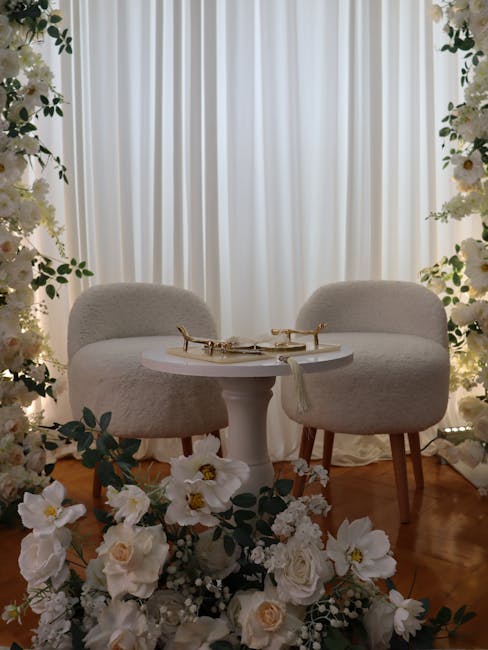
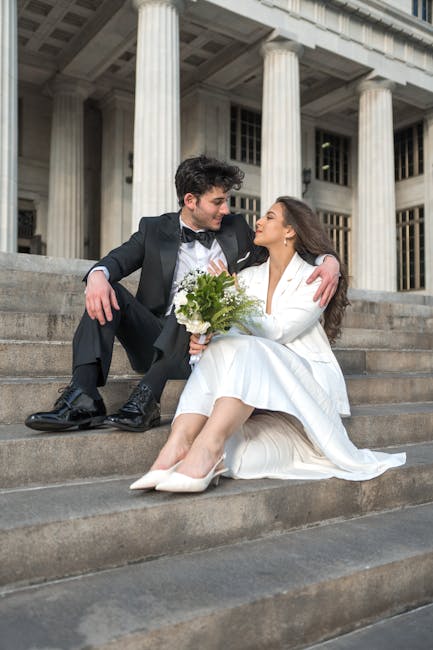
Step-by-step planning for intimate civil ceremony florals
An intimate civil ceremony has a different floral brief from a large wedding. You usually have fewer guests, a tighter venue layout, and a stronger focus on the moments people actually remember: the arrival, the signing table, the portrait backdrop, and the bouquet in hand. That is why step-by-step planning for intimate civil ceremony florals matters. The right plan keeps the flowers elegant without making the room feel crowded, overworked, or expensive for the sake of it.
In a smaller ceremony, every stem has to earn its place. The best florals do not simply decorate the space; they help define the mood, frame the vows, and make photographs feel polished. This guide walks you through the full process in a practical, human way: how to plan, what to prioritise, where couples usually overspend, and how to make good choices even if you are working with a compact registry office, a town hall, or a small licensed venue.
If you are also thinking about practical ordering details such as timing, delivery, and care, it can help to review a florist's delivery information, flower care advice, and service guarantees before you commit. Those details matter more than people expect, especially when the ceremony window is short.
Table of Contents
- Why intimate civil ceremony florals matter
- How the floral planning process works
- Key benefits and practical advantages
- Who this is for and when it makes sense
- Step-by-step guidance
- Expert tips for better results
- Common mistakes to avoid
- Tools, resources and recommendations
- Law, compliance, standards, or best practice
- Options, methods, or comparison table
- Case study or real-world example
- Practical checklist
- Conclusion
- Frequently asked questions
Why Step-by-step planning for intimate civil ceremony florals Matters
Small civil ceremonies have a particular challenge: there is very little room for guesswork. A large church or hotel ballroom can absorb generous arrangements. A compact ceremony room cannot. One oversized pedestal arrangement, for example, may block sightlines, crowd the registrar's table, or overwhelm the couple in photographs. On the other hand, florals that are too sparse can look accidental rather than intentional.
Good floral planning solves that balance. It helps you decide what the room needs, not just what looks pretty in isolation. That may mean a single statement arrangement at the entrance, a soft aisle line, a bridal bouquet, and a paired table arrangement for the signing table. Or it may mean only a bouquet and a few strategic accents if the venue is already visually strong.
There is also a logistics side. Civil ceremonies often run to a schedule. Flowers need to arrive on time, be in good condition, and fit smoothly into the venue's setup window. A well-planned order reduces stress for everyone involved, from the couple to the registrars to the person setting the table. Truth be told, a calm setup is often the difference between a beautiful morning and a rushed one.
How Step-by-step planning for intimate civil ceremony florals Works
The process is usually more straightforward than a full-scale wedding, but it still benefits from method. Start with the venue, then the photography, then the personal styling, and only then the flower selection. That order sounds almost too sensible, yet it stops a lot of avoidable problems.
First, identify the physical space. Measure the registrar's table, ask whether flowers can be placed on windowsills or ledges, and check whether there are restrictions around candles, water containers, floor-standing pieces, or access routes. A flower plan must suit the building, not fight it.
Next, decide the visual role of each arrangement. For some couples, the bouquet is the hero. For others, a ceremony backdrop or mantle arrangement matters more because it appears in every photo. In a small room, one strong focal point often beats several competing pieces.
Finally, work backwards from the ceremony time. Flowers should be conditioned, transported, and installed with enough buffer to handle traffic, weather, and the occasional delay. If you are using a professional florist, clear communication matters as much as design. Useful business details such as payment options and returns and refund terms are worth checking early, not after the bouquet has arrived.
Key Benefits and Practical Advantages
The strongest advantage of planning properly is that you get a refined result without waste. That is particularly valuable for smaller civil ceremonies, where budget and space are both finite. When each decision is intentional, the flowers can feel luxurious even without large quantities.
- Better visual balance: The arrangements complement the room size instead of overpowering it.
- More efficient budgeting: Money goes into the elements guests will notice most.
- Cleaner photography: Thoughtful florals frame faces and key moments, rather than cluttering them.
- Less setup stress: Fewer moving parts mean faster installation and fewer surprises.
- More personal style: Small ceremonies can lean into colour, texture, and seasonal details more confidently.
Another benefit is flexibility. Intimate ceremonies can be wonderfully responsive to the couple's taste. You might want a relaxed, garden-inspired palette with asymmetrical shapes, or something more formal and sculptural. Because the scale is smaller, small style decisions become more noticeable. That is a gift, if you use it well.
Who This Is For and When It Makes Sense
This kind of floral planning is ideal for couples hosting a registry office ceremony, a micro-wedding with a civil celebrant, or a simple licensed venue event where guest numbers are limited. It also suits people who care about design but do not want the overhead of a full wedding production.
It makes especially good sense if:
- your ceremony space is small or visually plain
- you want flowers to photograph well without dominating the room
- you are planning a weekday ceremony with limited setup time
- you prefer a focused selection of meaningful pieces
- you want to prioritise quality over quantity
It may be less useful if your venue already has abundant built-in decor and you only need a bouquet or a few hand-held pieces. In that case, a simpler order may be enough. But even then, a clear floral plan helps you avoid overbuying. Not every ceremony needs a floral parade. Let's face it, some spaces are best treated with restraint.
Step-by-Step Guidance
1. Start with the venue, not the flowers
Before you choose roses, ranunculus, or eucalyptus, look carefully at the room. Notice the wall colour, natural light, table shape, floor space, and any architectural features. A pale, minimal registry room often benefits from soft tonal flowers with subtle movement. A darker, more traditional room may need brighter blooms or stronger contrast.
If possible, ask for a few photos of the ceremony layout from the venue itself. Even a basic snapshot can help a florist understand scale. This is one of the most useful things you can do, and it takes almost no time.
2. Define the floral roles
For intimate civil ceremonies, there are usually four possible roles:
- Personal flowers: bouquet, buttonhole, corsage, hair flowers
- Ceremony focal point: backdrop, mantle, pedestal, doorway piece
- Table flowers: signing table, witness table, welcome table
- Transition flowers: entrance pieces or aisle accents
You do not need all four. In fact, most small ceremonies are better when they use only two or three. The trick is to decide what will be seen the most in person and in photos. That usually becomes your priority list.
3. Choose a palette that suits the setting
Colour choice should respond to the venue and season. Soft whites, creams, blush, and sage often work beautifully in daylight-filled rooms. Deeper berry tones, apricot, rust, or burgundy can create richness in cooler months. If your outfits are already strong in colour, quieter florals may be the better move.
A useful rule: let one element lead. Either the dress, the bouquet, or the room should be the visual anchor, not all three fighting for attention. That is how small ceremonies stay elegant.
4. Pick flowers for shape as well as meaning
People often start with flower meanings, which is lovely, but shape matters just as much. Some flowers are fluffy and romantic; others are neat and architectural. If your room is compact, a bouquet with some line and airiness may read better than a dense sphere of blooms. Likewise, arrangements with varied heights often feel lighter than one solid block of flowers.
Seasonal availability also matters. The best floral plans are grounded in what is naturally strong at the time of year. That usually gives you fresher stems, better value, and a more authentic look.
5. Decide whether you need a bouquet-led or venue-led design
A bouquet-led ceremony means the bridal bouquet is the main design statement, with the venue kept simple. A venue-led ceremony means the room carries more of the visual weight, often through an entrance piece, backdrop, or table arrangement. For many intimate civil ceremonies, bouquet-led styling works beautifully because it keeps the atmosphere personal and uncluttered.
If you are unsure, ask a florist to mock up two options: one minimal and one slightly fuller. That comparison is often more helpful than guessing from memory.
6. Plan for delivery, setup, and timing
Flowers for a civil ceremony have to arrive in good condition and at the right moment. If the venue has a narrow access window, build that into your order. If you are collecting flowers yourself, plan the journey carefully and keep the arrangements cool and upright. If they are being delivered, confirm who will receive them and where they should be placed.
You can also check broader service details such as delivery options and supplier information on the florist's main site at Flowers All Day. For local or regional browsing, it may also help to compare with Flowers by Florist. Those pages are useful if you are weighing service, timing, and presentation before you book.
7. Build in care for the day itself
Small flowers do not need constant attention, but they do need sensible handling. Keep bouquets in water or stored correctly until the final moment. Avoid leaving them in direct sun, beside radiators, or in a hot car. If the ceremony and reception are separate, make sure someone knows how the pieces should be moved.
If you want the flowers to stay at their best for portraits or a small meal afterwards, a quick reference to care guidance helps. The practical notes on flower care are a sensible starting point.
8. Photograph the arrangements before the guests arrive
This is a small step, but it pays off. Once the bouquet is held, the room is filled, and the registrar is ready, there is rarely time to step back and check the styling. A few pre-ceremony photos let you see whether the scale feels right. If the arrangement sits too low, too high, or too far from the camera line, you can still adjust it.
That one minute of calm can save a lot of second-guessing later.
Expert Tips for Better Results
Experienced florists usually think in layers rather than shopping lists. That is a helpful way to approach intimate ceremony florals too. Instead of asking, "What flowers should I get?", ask, "What should people notice first, second, and third?"
- Use texture to add interest: Garden roses, spray roses, stock, scabiosa, and branching greenery can create movement without bulk.
- Keep one focal area strong: A well-composed bouquet or table arrangement can do more than several underpowered pieces.
- Match the stem size to the room: Tiny blooms can disappear in a large space; very large blooms can swamp a small one.
- Think beyond the bouquet: Even a small ribbon finish, vase choice, or table runner can improve the overall composition.
- Ask for a realistic substitution plan: Seasonal flower planning is always stronger when alternatives are agreed in advance.
One practical observation: the most successful intimate ceremonies tend to look calm rather than busy. They feel edited. That does not mean bare. It means every piece belongs.
Common Mistakes to Avoid
Most floral missteps in small civil ceremonies are not about taste. They are about scale, timing, or trying to do too much at once.
- Over-ordering: More flowers do not automatically improve the room.
- Ignoring sightlines: Tall arrangements can block faces or photos.
- Choosing flowers without checking seasonality: This can affect both price and quality.
- Forgetting venue rules: Some locations restrict floor pieces, wet containers, or open flames nearby.
- Leaving transport too late: Delicate florals do not enjoy a scramble through traffic.
- Skipping a backup plan: If a stem variety becomes unavailable, you should already know the acceptable alternative style.
A lot of these issues can be prevented with a simple briefing and a few photographs of the venue. That sounds basic because it is basic. Basic is good when the schedule is tight.
Tools, Resources and Recommendations
You do not need a complicated toolkit, but a few practical resources make planning much smoother:
- Venue measurements: Even rough dimensions help with scale.
- Reference photos: Bring pictures of the room, outfits, and any flower styles you like.
- Seasonal flower lists: These help you stay flexible and realistic.
- Colour swatches: Useful if your clothing, stationery, or venue decor has a strong palette.
- Delivery and collection details: Confirm in advance, especially for time-limited civil ceremonies.
If you are comparing service standards, browse a florist's trust pages too. Useful references may include about the florist, contact details, and sustainability information. If you are ordering online, checking terms and conditions and privacy policy is sensible, not fussy. It is part of buying confidently.
Expert summary: For intimate civil ceremony florals, the strongest designs are usually the simplest ones done well. Start with space, define the focal point, keep the palette disciplined, and leave room for the flowers to breathe.
Law, Compliance, Standards, or Best Practice
Most floral planning is creative rather than regulatory, but there are still sensible standards to follow. Civil ceremony venues often have their own house rules around access, setup, water use, and what can be placed where. Those rules may not be legal in a strict sense, but they are operationally important and should be treated seriously.
If your ceremony is in a public building or licensed venue, check whether the florist or delivery driver needs to use a specific entrance or sign in at reception. In some spaces, the venue manager may ask for arrangements to be collected promptly after the ceremony. That is normal practice, and it should be built into your timings.
From a buyer's perspective, the most relevant compliance points are usually commercial: clear order terms, honest substitution policies, delivery expectations, and refunds if something goes wrong. Reputable florists should make these details easy to find. Pages like returns and refund information and guarantees can help set expectations before you place an order.
If you are organising flowers for a workplace ceremony or a larger private event under a business account, it may also be worth looking at corporate account options. That is not relevant for every couple, of course, but it can be helpful for venues and planners coordinating more than one booking.
Options, Methods, or Comparison Table
There is no single correct floral model for a civil ceremony. The best option depends on the room, budget, and how much visual impact you want. This comparison can help narrow it down.
| Approach | Best for | Advantages | Watch-outs |
|---|---|---|---|
| Bouquet-led styling | Very small rooms, registry offices, simple ceremonies | Elegant, personal, budget-friendly, easy to manage | May feel minimal if you want a decorated setting |
| Focal-point styling | Rooms with a strong signing table or backdrop area | Creates a clear visual anchor for photos | Requires careful scaling to avoid crowding |
| Light venue styling | Couples who want atmosphere without excess | Balanced, flexible, visually polished | Needs thoughtful placement to avoid looking sparse |
| All-in floral layering | Design-led ceremonies with enough space and budget | Most immersive and decorative | Can overwhelm a compact civil ceremony room |
If you are undecided, start with the room size and the photos you want to create. That usually tells you which approach fits best. The flowers should support the moment, not compete with it.
Case Study or Real-World Example
Consider a couple planning a late-morning civil ceremony for twenty guests in a modest town hall room. The walls are pale, the table is rectangular, and the natural light is decent but not dramatic. Rather than ordering multiple large arrangements, they choose a bouquet with soft ivory, blush, and pale peach tones, a compact table arrangement for the signing table, and a small entrance piece to greet guests.
The result is polished without being crowded. The bouquet reads clearly in photographs. The signing table feels intentional. The room still looks like a civil ceremony room, not a film set pretending to be one. That distinction matters more than people expect.
What made the difference was not floral volume. It was a careful sequence: venue first, palette second, arrangement scale third, delivery timing last. That is the pattern worth copying.
Practical Checklist
Use this before you place the order or confirm the final design.
- Confirm the ceremony time and access window
- Ask the venue where flowers can safely be placed
- Measure the signing table or key display area
- Decide the main focal point of the room
- Choose a palette that works with outfits and venue colours
- Check seasonal availability with your florist
- Agree on substitutions if specific stems are unavailable
- Confirm delivery or collection arrangements
- Review flower care instructions for the day
- Check terms, refund policy, and any guarantees
- Plan who will move or keep the flowers after the ceremony
If you can tick those boxes, you are in strong shape. The rest is refinement.
Conclusion
Intimate civil ceremony florals work best when they are planned with restraint, clarity, and a little imagination. Start with the room, decide what needs visual emphasis, and choose flowers that support the setting rather than overwhelm it. Keep the logistics simple, confirm the practical details early, and let the design breathe. That approach consistently produces a more polished, calmer result.
The good news is that you do not need a huge floral budget to make a small ceremony feel memorable. You need a clear plan, sensible scale, and a florist who understands how civil ceremony spaces actually function. If you are ready to explore options, compare service details, and narrow down what fits your day, take the next step with confidence.
Get a free quote today and see how much you can save.
Frequently Asked Questions
How far in advance should I plan flowers for a civil ceremony?
For a small civil ceremony, it is sensible to start planning several weeks ahead if you can, especially if you want particular flowers or a specific venue setup. That gives you time to confirm the space, discuss seasonal availability, and sort delivery timing without rushing.
What flowers work best for an intimate registry office ceremony?
Soft seasonal flowers with good shape usually work well: garden roses, spray roses, ranunculus, tulips, stocks, and textured greenery are all popular choices. The best option depends on the room, the season, and how formal or relaxed you want the design to feel.
Do I need ceremony flowers if the venue is already attractive?
Not necessarily. If the venue already has strong architecture or decor, you may only need a bouquet and one or two supporting pieces. In some spaces, less really is more.
How many floral arrangements are enough for a small civil ceremony?
Often two or three well-chosen pieces are enough: a bouquet, a table arrangement, and possibly a small focal point or entrance arrangement. The goal is to support the room, not fill every surface.
Can I reuse ceremony flowers at the reception?
Yes, and that is a smart way to stretch value. Small arrangements can often move from the ceremony table to the reception area, though you should plan the transfer carefully so nothing is damaged in transit.
Should I choose seasonal flowers or specific blooms I love?
If possible, combine both. Start with seasonal flowers for freshness and value, then include a favourite bloom if it is available and suitable for the design. That tends to produce the most balanced result.
What if a flower I ordered is unavailable on the day?
A good florist should discuss substitution options with you in advance. It is normal for seasonal flowers to vary, so the key is agreeing on a style direction rather than relying on one exact stem.
How do I keep bouquet flowers looking fresh during the ceremony?
Keep them cool, upright, and out of direct sun or heat where possible. If the bouquet is prepared in water or hydrated packaging, follow the florist's care instructions carefully for the best result.
Are there venue rules I should check before ordering flowers?
Yes. Ask about access, setup time, where flowers can be placed, and whether there are restrictions on floor-standing arrangements or wet containers. Different venues handle these details differently.
How do I choose between a bold bouquet and a quiet bouquet?
Look at the setting and your outfit first. If the room is simple and your clothing is minimal, a bolder bouquet can create a lovely focal point. If the venue or outfit already has strong visual presence, a softer bouquet often works better.
Can a florist deliver flowers directly to the civil ceremony venue?
Usually yes, but you should confirm delivery windows, access arrangements, and who will receive the flowers on arrival. Civil ceremonies can be time-sensitive, so clear delivery planning is essential.
What is the biggest mistake people make with intimate ceremony flowers?
Probably over-ordering. In a small room, oversized or overly numerous arrangements can make the space feel busy and reduce the impact of the actual ceremony. A more restrained plan often looks more expensive and more elegant.
Where can I check florist policies before ordering?
Look at the florist's delivery details, refund policy, guarantees, terms and conditions, and care guidance before you order. Those pages tell you a lot about how the business handles real-world issues and what to expect if plans change.